Web Development After Level 3 AI
There is a structural shift happening in how software is produced.
Most serious AI companies are already past experimentation.
They use AI to write code, draft tests, generate interfaces, and accelerate delivery.
That is level 3.
It matters.
But it is not the real break.
The real break comes when AI stops acting like a tool inside the workflow and starts shaping the workflow itself.
Level 4: Workflows reorganize
That is where level 4 begins.
At level 4, teams do not just use AI to move faster.
They reorganize around it.
Requirements become more important than tickets.
Standards become more important than raw output.
Evaluation becomes more important than generation.
The bottleneck starts to move.
Less time is spent writing the first version of the code.
More time is spent deciding what good looks like, verifying what was produced, and managing the systems producing it.
The visible layer accelerates, the real pressure moves below
For web development, this changes the stack in a serious way.
Front ends will be generated faster.
Boilerplate will get cheaper.
Iteration cycles will compress.
That part is obvious.
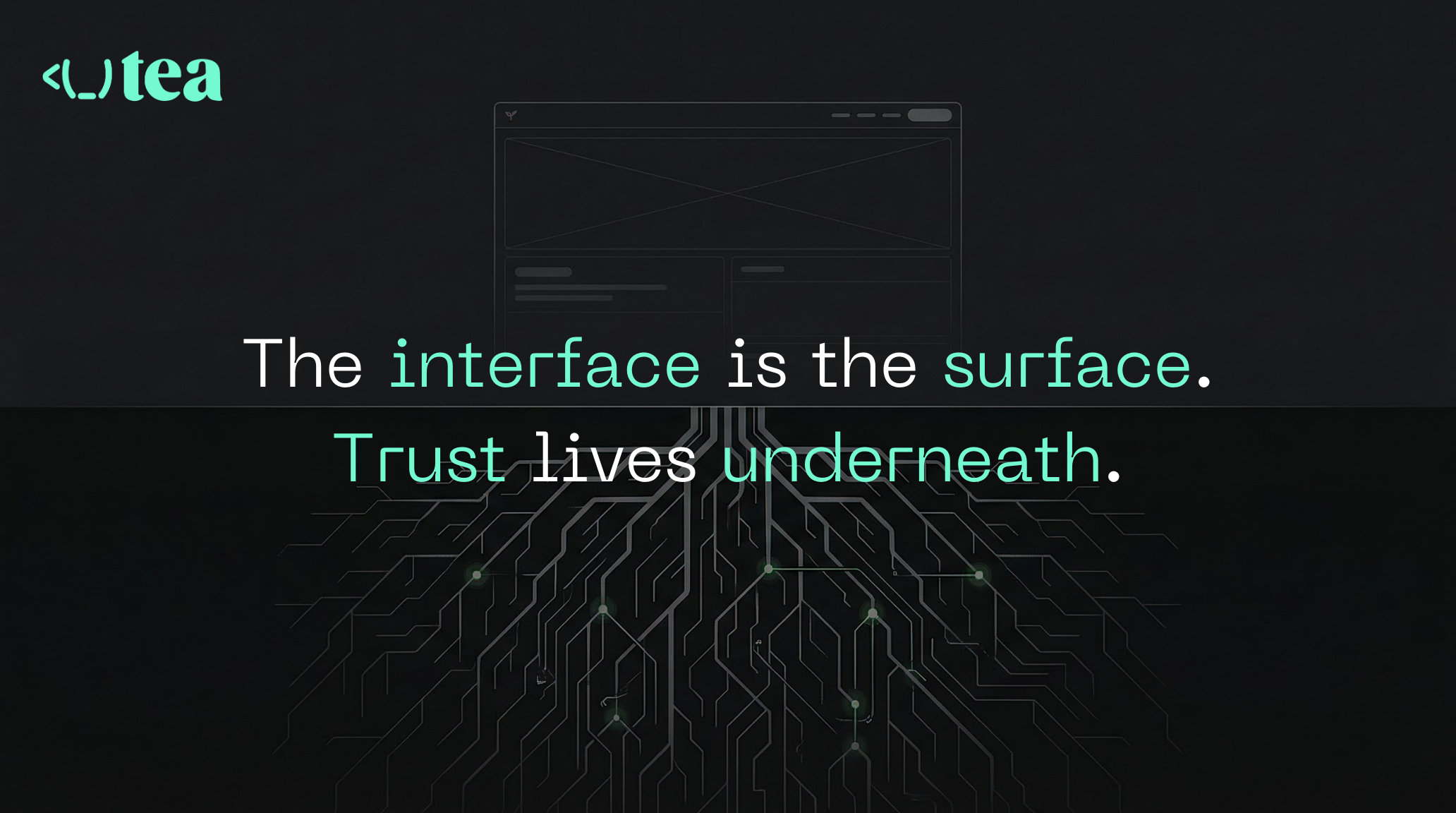
What matters more is what happens underneath.
When output scales, trust breaks
As output becomes abundant, trust becomes scarce.
Where did this code come from.
What packages does it rely on.
Who signed it.
Which system produced it.
Can the build be reproduced.
Can the result be verified before it reaches production.
These are not edge questions.
They become core questions as soon as software teams move from AI-assisted work to agent-shaped workflows.
Level 5: Governance becomes the system
That is the beginning of level 5.
Level 5 companies are not defined by how many models they use.
They are defined by how well they govern machine-produced work at scale.
They build around provenance.
They build around policy.
They build around verification.
They build around accountability.
Web development becomes a trust discipline
In that world, web development is no longer just a design and engineering discipline.
It becomes a trust discipline.
The visible layer still matters.
The interface still matters.
But the invisible layer becomes decisive.
Dependency integrity.
Artifact signing.
Agent identity.
Build attestations.
Review standards.
Rollback paths.
System-wide traceability.
The market is looking in the wrong place
This is where most of the market is still underestimating the change.
AI makes software easier to produce.
It does not make software easier to trust.
In many cases, it does the opposite.
That is why open source becomes more important, not less.
The next wave of web products will still depend on shared libraries, shared tooling, shared maintainers, and shared standards.
AI increases the rate at which those foundations are reused.
It increases the pressure on the dependency layer.
It increases the need to know what is real, what is maintained, and what should be trusted.
This is the layer Tea is built for.
Not the generation layer.
The trust layer around it.
Tea starts from a simple view.
If software production is becoming more agentic, then provenance cannot remain optional.
If open source remains foundational, then attribution cannot remain weak.
If more value is being built on top of shared code, then verification has to move closer to the code itself.
That is the direction of travel.
Level 3 changes productivity.
Level 4 changes workflow design.
Level 5 changes what a software company needs to be good at.
The future of web development will not be defined by who can generate the most code.
It will be defined by who can verify it, govern it, and build on foundations that can still be trusted when software output multiplies again.
The question is not whether this shift happens.
It is whether the systems underneath the web are ready for it.


